


Block Paving – Cleaning, Sanding & Sealing
Block paving is one of the most popular types of driveways. It consists of hundreds of small bricks known as pavers. Made of concrete or clay, there laid in various patterns and colours to create stunning effects.
Varying in shape and size, block pave driveways all share the same laying technique. Laid on a bed of sand and compacted down, fine sand known as kiln dried will then get swept into the joints. This aids its appearance and strength. After any form of pressure cleaning the sand must be
We aim to invest in the very best equipment. Here is a video of our latest tool, the Falch Pointspeed 5 tearing through a really dirty driveway. We are one of a very few companies that have one of these tools available.
Popular Misconceptions
It’s not uncommon to get told, ‘”Don’t pressure wash your block pave drive”. Many stone manufacturers and contractors tell customers this. But then the question must get asked, How do I keep it clean? Simple scrubbing with a brush and soapy water is not going to cut through the dirt or shift any weeds.
You may have got told, “pressure washing can damage the blocks”. In a way yes, regular high-pressure cleaning can erode the surface of the block. However, these blocks are subject to constant weathering and erosion by simply being outdoors. Foot and vehicle traffic, acid rain, bird droppings, snow, ice and salt will all erode the blocks faster than any pressure washer can. Unless your driveway is sealed from day one, natural weathering and erosion will occur.
The second main reason manufacturers and contractors tell people not to pressure wash, is simply because the homeowner tends to attempt this job by themselves, with a simple DIY washer. The actual washing is not the issue, many homeowners neglect the most important step, re-sanding. If the driveway isn’t re-sanded after cleaning, it can lead to loose blocks. This, in turn, can cause shifting, lifting/sinking and also cracking due to vehicle traffic. We cover sanding on our dedicated
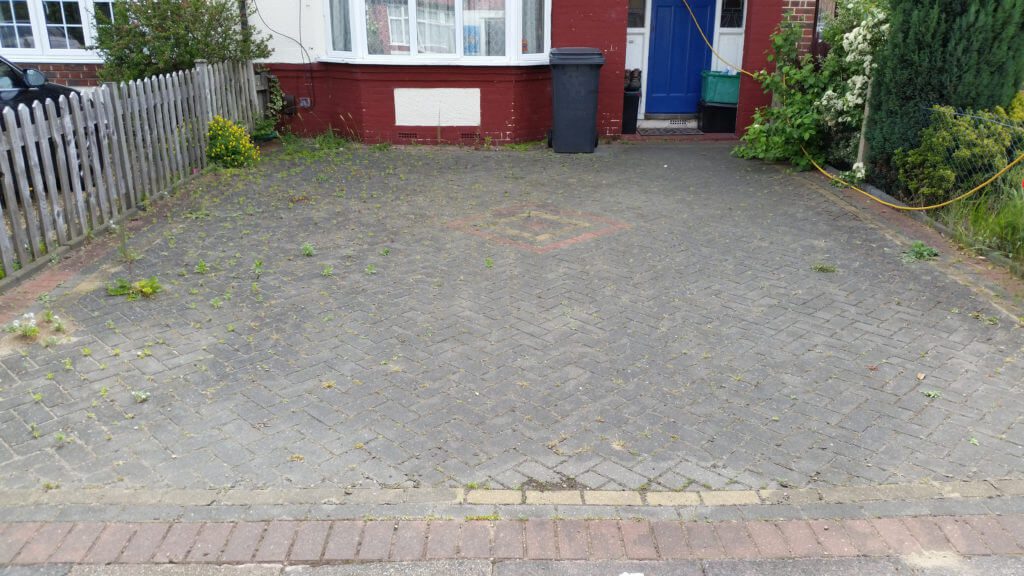
The picture below shows the irregular wear pattern often associated with environmental erosion. You can clearly see where 2 vehicles are usually parked. The blocks beneath the cars aren’t subjected to such natural weathering, and thus still look smooth and new.

A dirty block pave driveway showing common vehicle wear patterns.
Black Staining
A very common problem that we come across. Black staining on block paving becomes apparently visible after cleaning. Often mistaken for lichen, it’s very similar in

Black staining on block paving

This type of staining is a form of fungus which normally stems from hedges or border plants. It’s contained within the sap of plants and then spread onto areas of the stone. Often found in damp, shady areas surrounded by hedges or greenery.
Another major culprit for this type of staining
Pressure washing alone won’t remove it, it will need a cleaning agent such as sodium hypochlorite. Removing the stains isn’t overly hard but it does require more time and chemicals. Your main issue is that unless the source gets
Weeds and Moss
Block pave drives are highly susceptible to weeds and moss growth between the joints. A regular weed killing treatment is advisable to keep them at bay. Weeds can grow at an alarming rate, we can remove the weeds during the cleaning process using a turbo lance. This tool has a rotating nozzle that reaches into the joints to remove the weeds. It won’t always remove the root, so a good quality weed killer needs applying. This will kill off the underlying roots. We are currently unable to offer a weedkilling service due to licensing laws, however, this is a service we are looking into. Utilising a sealer or polymeric sand can help reduce weed growth.

Here we have a video showing how turbo nozzles work.
https://www.youtube.com/watch?v=_8CYnhGZBqE
You can also watch our video on block pave driveway cleaning using a turbo nozzle.
https://www.youtube.com/watch?v=m9m7VIaQbMY
Treatment or Cure?
Once weeds start growing on your block pave driveway, patio or path, it can be quite hard to get a grip on the situation. Store bought weedkillers can help, but may not rid you completely of weeds. Readily available products or not as strong as “professional grade” weedkillers. Moss doesn’t tend to react to weedkiller as quickly as weeds, so the only real way to get rid of moss is to pressure clean the area.
To help “reduce” weed re-growth we can either seal the driveway or use special block pave polymeric jointing sand from companies such as Resiblock. Unfortunately, the problem with both these methods is that it can be quite expensive and there is no way to guarantee an area to stay completely weed free. Sealers tend to soak deeper into the jointing sand resulting in better weed prevention than most other methods. Block pavers are subject to movement, and too much movement or weight can cause the sealed sand to crack, thereby opening the joint to weeds.
Sealing Block Pave Driveways
Good quality, long lasting sealants and sands don’t come cheap. Sealants range from DIY store brands of around £15-£20 a tin, up to dedicated professional grade ones at up to £100 a tin. By using top quality sealants you should expect 4-5 years of “block” protection, so working it out over a 5 year period isn’t so bad. A good quality sealant will add a protective water-repellent layer to the surface which helps stops oil stains. A sealer also binds the jointing sand to help “reduce” weed growth. Binding the sand also helps sand loss due to wind and rain. We have seen lower range sealants wearing off after 12-18 months.
More information on sealing available on our dedicated sealing page.
What is Polymeric Jointing Sand I Hear You Ask?
Block pave driveways have fine sand between the joints which give it overall strength. The problem with this sand is that weeds can grow through it. Some of this sand can blow out in strong winds (especially if it has been recently cleaned). It will also wash away by strong rainfall (even more so on steep drives).
You can help combat these problems by using special jointing sands known as polymeric. This sand contains water-activated polymer binders which solidify to almost mortar-like consistency. This helps to “reduce” weed growth and prevent sand loss. When applied correctly it should stand up to light pressure cleaning, which in turn makes cleaning quicker and cheaper. The downside to using polymeric jointing sand when used after cleaning is the joint depth, invariably you lose around 5-10mm of jointing sand depending on the driveway style.
Polymeric sand only sets hard in the space that’s topped up, not the total block depth. Polymeric sand is best installed on new driveways, to achieve the greatest sand depth. We’re approved Resiblock contractors. Sealing or polymeric sanding is something we can do for you.
For a better understanding of joint sand depth, see our dedicated sanding page.
If sand gets washed away or isn’t replaced after cleaning it can lead to lifting and or sinking of the blocks. Water will run beneath the blocks causing the sand bed to shift, this, in turn, makes the blocks move. Similarly, serious weeds or roots can cause the same problem.
Sanding
When this type of driveway’s cleaned it washes away some of the jointing sand, this needs replacing when it’s dry. Kiln dried sand is required, it’s so fine it drops down into the joints without the need for a vibrator plate. Normal building
Oil & Stains
Oil stains are also a big factor as the blocks are quite porous and tend to absorb oil and grease fairly quickly. As with any oil stains, treating them straight away is the best method, but unfortunately, they can’t always be removed.
A good quality driveway oil remover is normally around £20.00 a litre, they work really well if the oil stain is quite fresh. If the stain has sat untreated for some time, it is usually easier and cheaper to replace some of the blocks. They only tend to cost pence each. If you’ve had the driveway laid, the chances are they left some spare bricks. These bricks are better than new as they will be pre-weathered.
Sealing
Often a misleading subject, sealing is a good practice although it’s not without its downsides. Using a sealer can help prevent oil stains, and will also bind together the jointing sand. Steep driveways are more prone to sand loss as rainwater will wash some away. Sealing will bind the sand and hold it in the joints. The problem is good quality sealers are quite expensive. We like to assess each driveway and recommend the best option. Sealing ‘WILL NOT” guarantee complete weed protection but will offer a massive improvement.
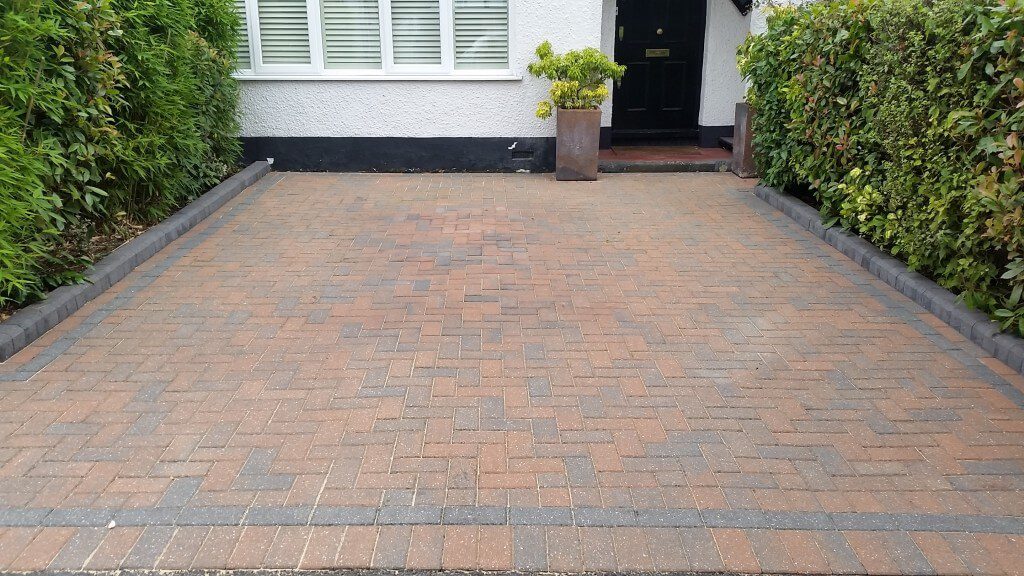
Below are some pictures of work that we have carried out on block paving areas. The results are amazing. We can clean, de-weed & re-sand all types of block paving driveways, patio’s/paths. As approved Resiblock contractors, if required we can seal your drive too. You can help reduce weed growth by using polymeric jointing sand. Give us a call, text 07585 293902 or drop us an email info@dirtydrive-away.co.uk and we can get you clean.




If you have any question please feel free to get in touch. You can navigate our site from the drop down boxes above, or here are a few links to some of our popular pages.
Have a look at our YouTube channel https://youtube.com/dirtydriveaway
We like our customers to leave us reviews on Facebook, so have a look at our page.


