


Driveway Sealing
It’s a common misconception that applying a sealer will stop weeds. Sealing will bind the jointing sand setting it hard. Unfortunately, there is no way to guarantee a 100% weed free area. Weeds grow wherever there is a crack. Block paved areas are subject to a degree of flexibility, it can be hard to keeping weeds at bay.
Unfortunately we have taken the decision to stop offering a sealing service. We have been undertaking driveway sealing for many years, but recently we have run into more and more difficulties. The weather plays a massive part in getting a driveway sealed properly and any change in forecasted weather means lost time on our part. Due to the increased cost of materials and trying to stay competitive on application pricing, it has become harder to keep it financially viable. We have therefore decided to cease taking on anymore sealing work. We are still more than happy to clean and offer advise should you wish to undertake the job yourself.
It isn’t uncommon for cleaning companies to try and hike up their prices by pushing sealing. Trying to get you to seal your patio or driveway after cleaning is a sure fire way to skyrocket the price. Sealing is good practice but it’s not without its downsides. As with most things in life, you get what you pay for. A cheap sealer will usually last for approx 12-18 months. A high-end acrylic or polyurethane sealer can last up to 5 years. Don’t mistake something like a water seal for an acrylic sealer, they are totally different products.
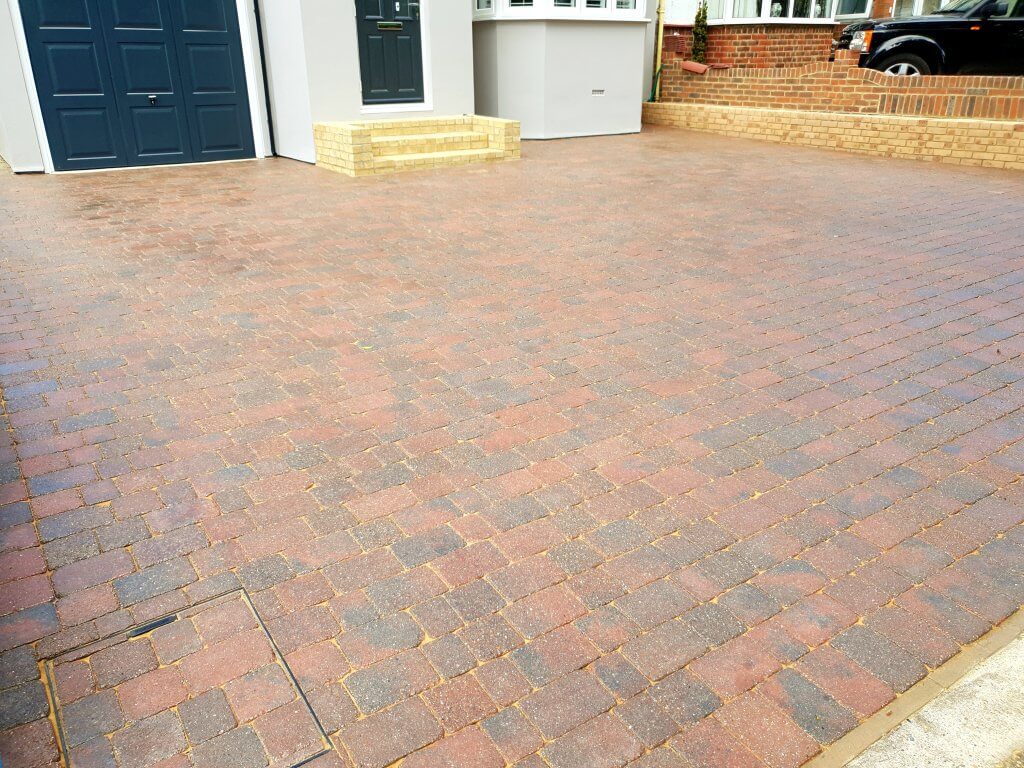
Block pave driveway sealed with Resiblock Superior Gloss.

Sealing products vary in price. Some cheap DIY store-bought products range from around £15-£20 per tin upwards.
Companies such as Resiblock, Kingfisher and SmartSeal, supply high quality sealing products. Prices for these high quality sealers range from £40-£125+ per tin. Sealers tend to come in water based, acrylic and polyurethane. Acrylic sealers will last longer than water based variants. They bind the sand better and give that satin damp look finish. Polyurethane is harder and lasts the longest but is more difficult to work with.
You have to be careful with delicate stones such as granite, limestone and porcelain. These areas need dedicated sealers
Anyway the nitty gritty…Pros & Cons to driveway sealing
Pros:-
-
Stays cleaner, helps deter the build-up of ingrained dirt and grime.
-
Can help protect the area for up to 5 years.
-
Stops the ingress and absorption of oil or stain causing accidents.
-
Reduces weed growth by binding the jointing sand. It also stops sand loss due to rain and wind.
-
Gives your drive or patio a constant damp look (looks nice on a natural stone if choosing an acrylic sealer)
-
Adds water repellency, thus reducing the chance of frost/water freezing.
-
Helps prevent the infection and spread of lichen and fungus-based problems.
Cons:-
-
Cost, sealing can be expensive. Depending on the brand a 5L tin will cover approx 10-15sqM. With an average cost of £12.50sqM+ to clean, sand and seal, the cost soon racks up.
-
Acrylic sealers are best applied by sprayer for greatest penetration. Polyurethane sealers aren’t sprayable. You will need sacrificial (cheap, use and chuck) rollers to apply the product. Block pave sealers are usually 2 coat applications. Coverage varies depending on the product and the stone type. Applying an acrylic sealer by sprayer gives better joint penetration. Having a good flooded joint ensures the sealer can work deep into the sand joint for a much better bond. Spraying’s preferred as it gives a much better finish as it avoids sand pull out that a roller can cause.
-
The area needs to be bone dry before applying. This is more so with block paving as the sand joints take longer to dry out. (5days is usually the minimum recommended dry time). Resiblock (polyurethane) actually recommend 7days after pressure cleaning. It needs to remain dry (rain-free)for 48hrs before and 12-24hrs after the 2nd coat. Picking the right day is challenging. Acrylic sealers are more resilient. They still need to remain rain free for at least 8-12hrs after 2nd coat.
- You cannot drive on the area for 24-48hrs after.
-
Polyurethane sealers can be difficult to remove without dedicated removal products. If a sealer gets wet before the cure time it can cause white moisture blooms ruining the finish. Acrylic sealers are easier to work with. Issues like this can be rectified afterwards with a dedicated solvent.
-
Takes away the natural drainage of the surface. When you bind up the sand it makes the area impermeable, this means water won’t drain through it.
Driveway Sealing Issues – White Blooms
This is one of the most common post sealing issue. A lot of people don’t understand the sealing process. Or why there needs to be several days between cleaning and sealing. The answer is dry time.
New Driveways
White blooms can either be a reaction with the sealer or efflorescence. New driveways are more prone to efflorescence blooms than an old one, but it can still happen. Efflorescence is the release of salts within the blocks. These salts are a common sight on new brickwork. It can take a while for these salts to disappear on their own. There are special chemicals that can help should they appear. New driveways should weather in for around 6-8 weeks before any sealing’s contemplated. If the new driveway isn’t left to acclimatise, salts can become trapped beneath the sealer. This can result in white patches on the block or the sealer not bonding and flaking off.
Water
When you pressure wash a block pave area you are introducing a lot of water, when I say a lot I mean hundreds of litres. Yes, some will run away to drain, but a lot of the water gets absorbed by the joint sand and sub base. Once this sand becomes saturated it can take ages to dry out. It may sound silly but if you driveway is flat it should be dry enough to seal after 5-7 days depending on the weather.
If your driveway has an incline, you will find that the water will travel down the sub base to the lowest point. This means that the top point of your driveway may be dry, but the lowest point will still have damp patches. Driveways with inclines generally need a lot longer dry time, some more than a week. A sealer won’t react too well with damp sand, this is why you sand and seal at the same time. This way you can see if the fresh dry sand wicks up any moisture from the joints. Then after around 30 minutes you scrape out some of the joint sand and its still dry then your OK to seal.
Help my driveway!
Back in Spring, we had a gentleman contact us after finding our website and facebook page. To cut a long story short he had recently had his driveway cleaned, sanded and sealed by another company. After approx 24hrs he noticed these white blooms appearing across his driveway.
The contractor wasn’t very forthcoming with information, so he contacted us for advice. In short, the white blooms are moisture on or within the block, creating a reaction with the sealer.
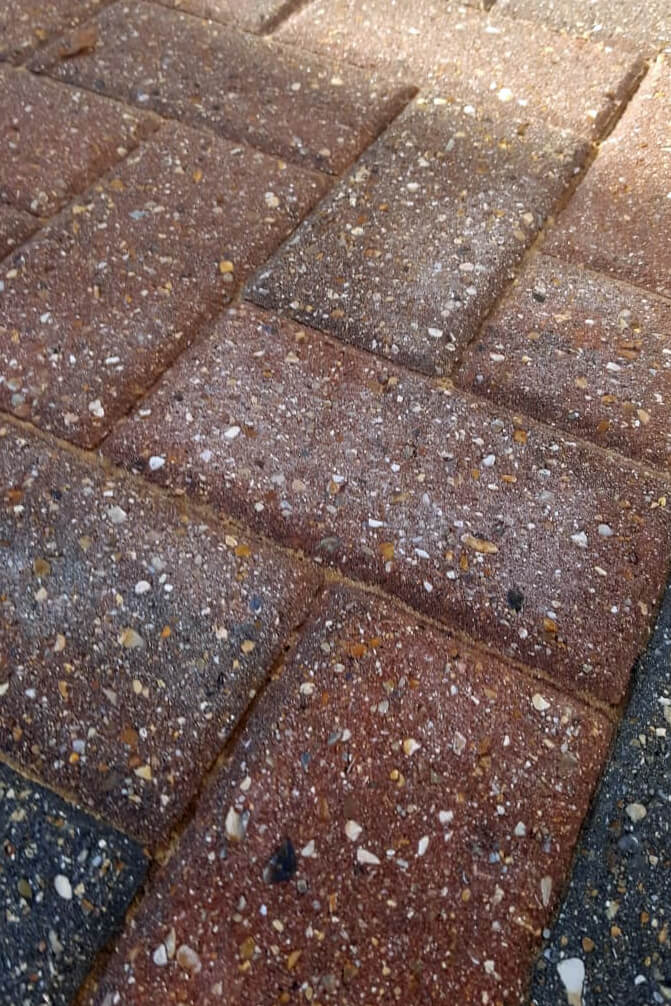
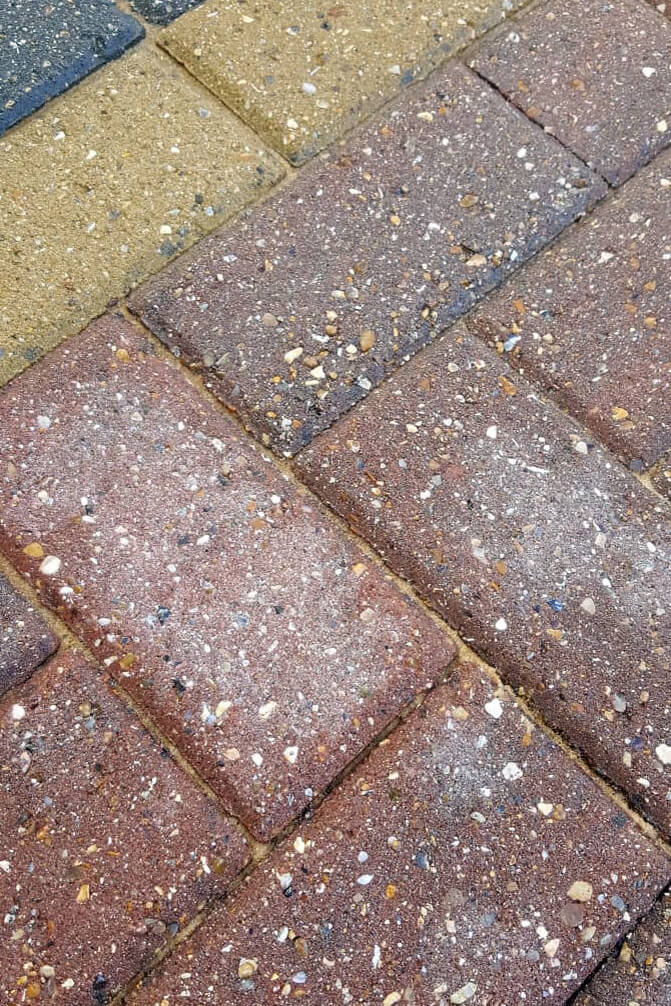
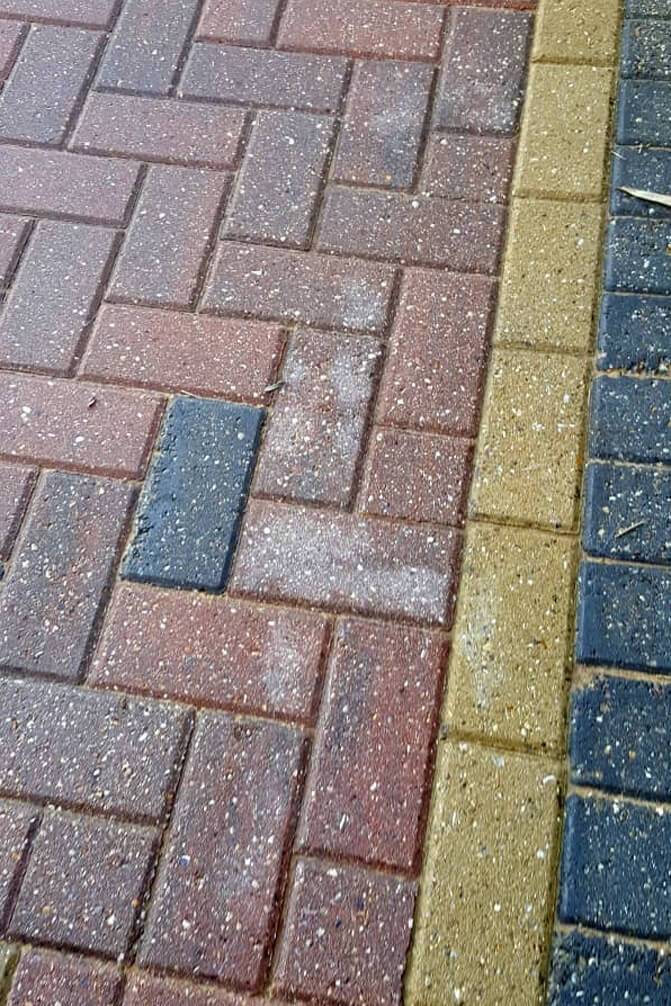
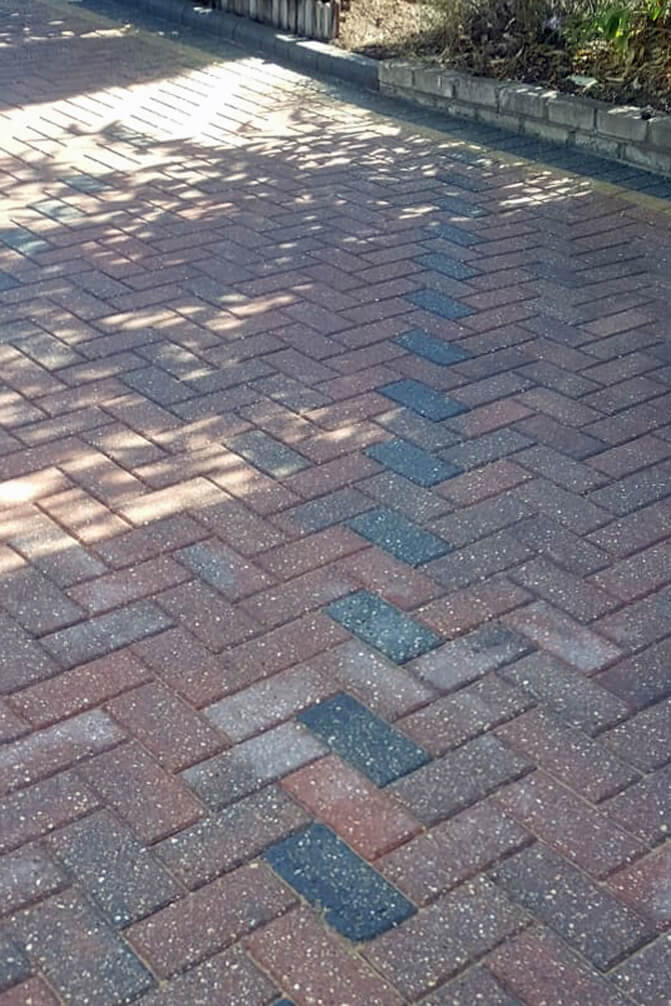
When contemplating the application of a sealer you must consider the weather. Hard in England, but you need to ensure at least 8-12hrs of no rain after the 2nd coat to ensure these blooms don’t appear. Some manufacturers state 24hrs after final coat.
The blocks and jointing sand need to be dry before sealing, at least 5-7 days after cleaning. If the blocks are damp or the sand is wet it can cause these milky white blooms. These patches are difficult to remove without harsh chemicals.
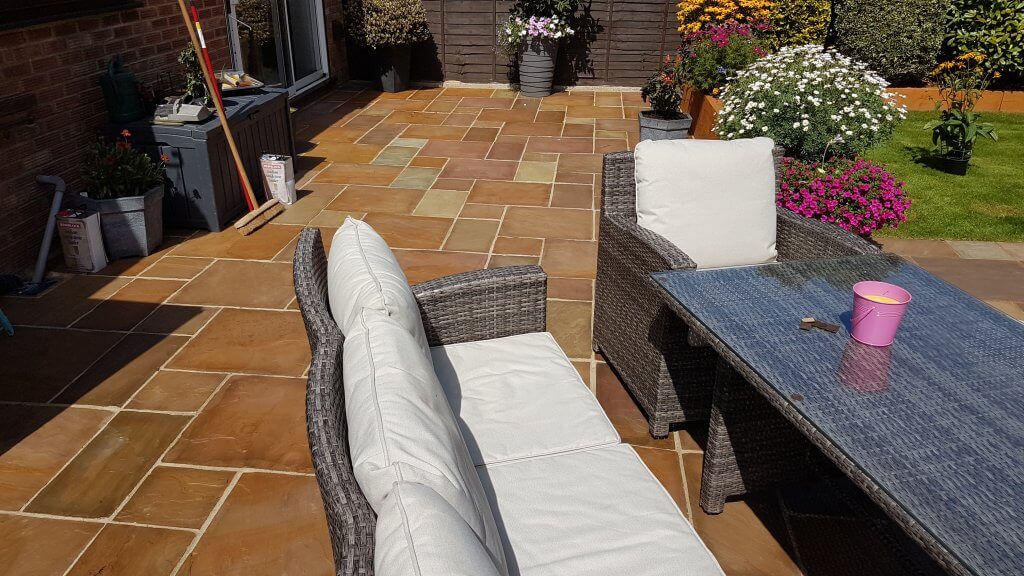
Indian sandstone cleaned and sealed with Resiblock Colour Enhancer.
Driveway or patio sealing has its advantages. The only real major downsides are the cost and weather conditions. A 100sqM block pave driveway would cost in the region of £450+ in a good quality sealer plus labour. Sealing natural stone is good practice as sandstone is expensive to have laid. Grease and oil stains can be hard to remove completely. Having a good quality sealer put down will help oil from penetrating the stone. Natural stone sealers are typically single coat application whereas block paving is two.
We have a couple of dedicated videos on sealing on our YouTube Channel. You can find them on here www.youtube.com/dirtydriveaway
If you have any questions regarding sealing please feel free to get in touch. Call, text or WhatsApp us on 07585 293902. Email us dirtydriveaway@gmail.com or use the contact form here. We offer free advise and we don’t bite. We cover Bromley, Beckenham and most of Kent, see our Service area.
Have a look at our FAQ’s Page for answers to common questions.
We like our customers to leave us reviews on Facebook, so have a look at our page.


